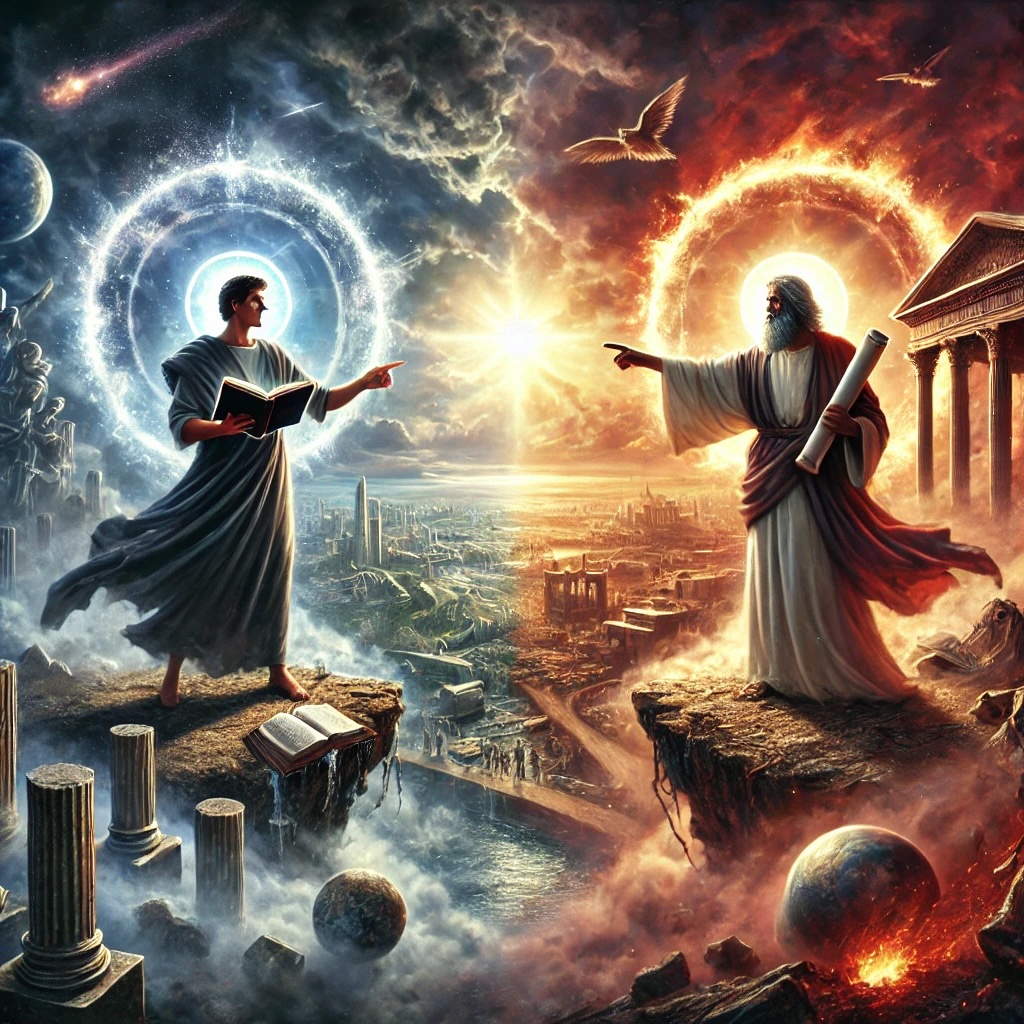
Revelation 19:11-21 depicts Christ’s victorious return on a white horse, the defeat of the beast and the false prophet, and the final battle between Christ and the forces of evil. Preterists interpret this passage as symbolizing events that took place in the first century, particularly the judgment of Jerusalem and the end of the old covenant system. The key points of the preterist interpretation are:
- The Rider on the White Horse (Revelation 19:11-16): Preterists understand the rider on the white horse, referred to as Faithful and True, to be Jesus Christ. However, rather than interpreting this as a future physical return at the end of time, preterists perceive it as a symbolic victory of Christ over the Jewish leaders, the Roman Empire, and the old covenant system. The image of Christ riding a white horse reflects His authority and divine judgment against the apostate city of Jerusalem, which rejected Him.
- The sword coming out of His mouth represents the word of God, which brings judgment upon God’s enemies, particularly the judgment against Israel and Jerusalem for rejecting Christ.
- The name “King of kings and Lord of lords” symbolizes Christ’s sovereign rule over the kingdoms of the earth during the judgment of Jerusalem and the establishment of a new covenant through the church.
- The Defeat of the Beast and the False Prophet (Revelation 19:17-21):
Preterists interpret the beast and the false prophet as representations of the Roman Empire and its false religious system, including emperor worship, which persecuted Christians. The battle against these figures is understood as the fall of Jerusalem in A.D. 70 and the destruction of the Jewish leadership, that had aligned itself with Rome in rejecting Christ.- The consumption of the flesh of God’s enemies by the birds of prey symbolizes the total destruction of Jerusalem and its leaders, who are judged and completely defeated by Christ.
- The Final Battle: The preterist view interprets this as a symbol of the end of the Jewish state due to the Roman destruction of Jerusalem in A.D. 70, representing the ultimate victory of Christ and the church over the old covenant system and the forces of apostasy. It is not a literal final battle at the end of time but rather a spiritual victory over the forces of evil that culminated in the destruction of Jerusalem.
Dispensational Response to Revelation 19:11-21
Dispensationalists like me, who adhere to a futurist interpretation, view Revelation 19:11-21 as depicting the literal second coming of Christ at the end of the Tribulation. This is when He returns to defeat the Antichrist, the false prophet, and all the forces of evil in a final, physical battle. The key points of the dispensational interpretation are:
- The Rider on the White Horse (Revelation 19:11-16): I understand that the rider on the white horse is the literal, physical return of Jesus Christ to Earth at the end of the Tribulation period. This will be the climax of God’s judgment on Earth and the beginning of the Millennial Kingdom.
- Christ’s appearance on the white horse will be His return in glory to defeat the Antichrist, bring judgment on the wicked, and establish His reign on earth. The sword coming from His mouth represents the power of Christ’s word to destroy His enemies.
- The title “King of kings and Lord of lords” emphasizes Christ’s absolute sovereignty and dominion over all the earth, which will be fully realized in the Millennial Kingdom.
- The Defeat of the Beast and the False Prophet (Revelation 19:17-21):
The beast (the Antichrist) and the false prophet are seen as literal, future individuals who will lead a global rebellion against God during the Tribulation. The final battle described here is often called the Battle of Armageddon, where the Antichrist’s forces will gather to oppose Christ.- Christ will defeat them at His second coming, and the beast and false prophet will be thrown into the lake of fire, marking their eternal judgment. The army of the Antichrist is destroyed, and the remaining wicked are slain by the sword of Christ, symbolizing the complete defeat of the forces of evil.
- The Final Battle:
I think that John is giving us a prophetic preview of the literal Battle of Armageddon, a future event that will occur at the end of the Tribulation. The armies of the world, led by the Antichrist, will gather in the valley of Megiddo, only to be decisively defeated by Christ. This event is followed by Christ’s establishment of His earthly kingdom for a thousand years (the Millennial Kingdom).
Key Differences Between Preterist and Dispensational Interpretations
| Aspect | Preterist Interpretation | Dispensational Interpretation |
| The Rider on the White Horse | Represents Christ’s symbolic victory over apostate Israel and Rome in the first century. | Represents the literal second coming of Christ to defeat the Antichrist and establish the Millennial Kingdom. |
| The Defeat of the Beast and False Prophet | Symbolizes the judgment of Jerusalem and apostate Israel by Rome in A.D. 70. | Refers to the literal defeat of the Antichrist and false prophet at the Battle of Armageddon. |
| The Final Battle | Symbolizes the end of the Jewish statewith the fall of Jerusalem in A.D. 70. | Refers to the Battle of Armageddon, a literal conflict between Christ and the Antichrist’s forces at the end of the Tribulation. |
| The Nature of Christ’s Victory | Christ’s victory is spiritual and occurs in the first century through the destruction of Jerusalem. | Christ’s victory is physical and literal, culminating in the defeat of evil forces at His second coming. |
Summary
The preterist interpretation of Revelation 19:11-21 views Christ’s victory as symbolic of His judgment on Jerusalem and the apostate Jewish system, culminating in the destruction of the city in A.D. 70. The rider on the white horse represents Christ’s authority and judgment over the forces of evil, particularly the Roman Empire and apostate Israel. The defeat of the beast and false prophet symbolizes the fall of the old covenant system and the establishment of the new covenant in the church.
In contrast, dispensationalists interpret this passage as describing the literal second coming of Christ at the end of the Tribulation. Christ’s return will mark the Battle of Armageddon, where He will defeat the Antichrist and false prophet, establishing His earthly reign in the Millennial Kingdom. Dispensationalists see this as a future, physical event rather than a past fulfillment in the first century.
These differing interpretations reflect the broader divide between preterism, which views Revelation as fulfilled in the first century, and dispensationalism, which understands it as describing future events in the end times.

 TheoFaith