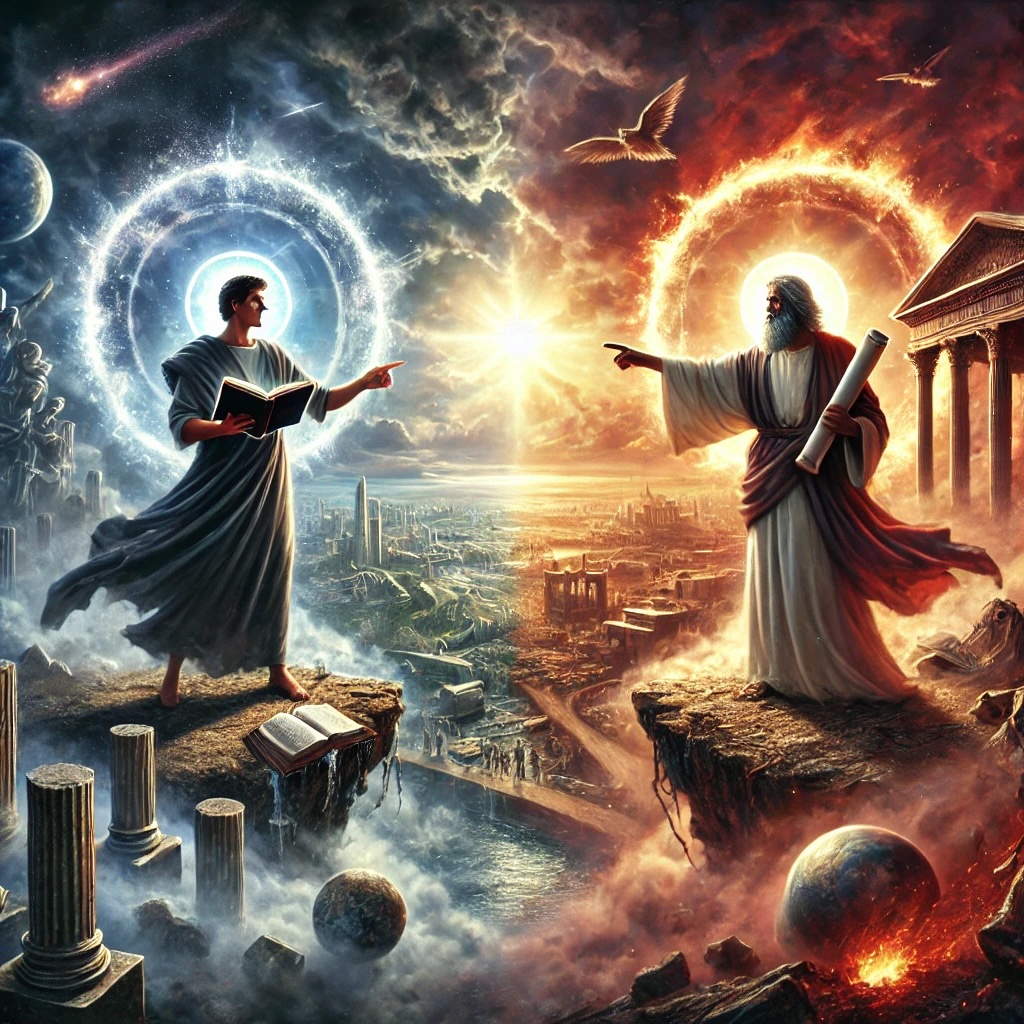
In Revelation 6:12–17, the sixth seal is opened, bringing about some dramatic cosmic events! We see an earthquake, a darkened sun, the moon appearing like blood, falling stars, and even the sky rolling up like a scroll. Some folks, particularly those embracing the preterist interpretation, view this passage as a vivid symbol of significant historical events that were just around the corner for the first-century audience. They especially relate it to the fall of Jerusalem and the judgment on Israel. Let’s dive into some key points!
- Cosmic Imagery as Symbolic: Preterists view the cosmic upheavals (earthquake, darkened sun, falling stars) as symbolic language reflecting political and social turmoil. These images are understood as symbolic representations of the judgment on Israel and the collapse of Jerusalem in A.D. 70, rather than literal cosmic events.
- This type of imagery is drawn from the Old Testament prophetic tradition (e.g., Isaiah 13:10, Ezekiel 32:7-8, Joel 2:31), where cosmic disturbances are used to symbolize the fall of nations or divine judgment.
- Historical Fulfillment in A.D. 70: The great earthquake and celestial disturbances are often connected with the events surrounding the Roman siege of Jerusalem. The fall of the Jewish temple, the destruction of the city, and the devastation of the Jewish people are seen as a fulfillment of the cosmic imagery in this passage.
- Some preterists view these events as symbolic of the end of the Old Covenant, which is being replaced by the New Covenant, as Jesus had prophesied (Matthew 24:29–30).
- Judgment on Israel: The reference to “the wrath of the Lamb” and the desire of kings, rulers, and the mighty to hide from God’s judgment is interpreted as the judgment on Israel for rejecting Jesus as the Messiah, culminating in the destruction of Jerusalem and the temple.
- The “great day of their wrath” is understood as the fulfillment of Jesus’ prophetic warning in Matthew 24 and Luke 21 about the coming judgment upon the city.
Dispensational Response to Revelation 6:12–17
In contrast, dispensationalists interpret Revelation 6:12–17 as describing literal, future cosmic events that will occur at the start of the Tribulation, signaling the imminent return of Christ and the establishment of His kingdom. Dispensational responses to this passage include:
- Literal Cosmic Events: Dispensationalists interpret the cosmic disturbances in a literal sense. The sun being darkened, the moon turning to blood, and stars falling from the sky are seen as real, supernatural occurrences that will happen during the Tribulation. These events are associated with the start of the end times, marking a dramatic and cataclysmic shift in world history.
- This interpretation is consistent with the futurist framework of Revelation, where these events signify the unleashing of God’s judgment on the earth during the Tribulation period.
- Distinct from A.D. 70: Dispensationalists firmly reject the preterist view that these events were fulfilled in A.D. 70. They argue that these signs are not to be tied to the fall of Jerusalem, as the passage in Revelation is clearly speaking of events that are to come at the end of the age, before Christ’s Second Coming.
- The destruction of Jerusalem in A.D. 70 is seen as a historical event, but it is not the fulfillment of the events in Revelation 6:12–17. Instead, dispensationalists place these events in the future, particularly during the Great Tribulation.
- Christ’s Imminent Return: The cosmic disturbances are interpreted as signs that precede Christ’s return to earth. Dispensationalists see these events as setting the stage for the final judgment and the establishment of Christ’s millennial kingdom. The passage is understood as referring to the time when Christ’s wrath will be poured out on the earth, culminating in His physical return.
- The reaction of people to the cosmic disturbances—seeking to hide from God’s judgment—underscores the terror and realization of the nearness of Christ’s return and the finality of His judgment.
- Judgment on the World, Not Just Israel: Dispensationalists see the judgment described in Revelation 6:12–17 as affecting the entire world, not just Israel. While Israel’s rejection of Christ in A.D. 70 led to judgment on that nation, the events in Revelation 6 are seen as part of a global judgment that will affect all of humanity during the Tribulation.
- The judgment is not limited to Israel but is part of God’s final judgment upon the world, leading to the ultimate defeat of Satan, the Antichrist, and the establishment of Christ’s rule.
Key Differences
| Aspect | Preterist Interpretation | Dispensational Interpretation |
| Cosmic Imagery | Symbolic of political and social turmoil, especially the fall of Jerusalem. | Literal cosmic events marking the beginning of the Tribulation. |
| Historical Fulfillment | Fulfilled in A.D. 70 with the destruction of Jerusalem. | Future fulfillment at the start of the Tribulation, before Christ’s return. |
| Judgment Focus | Judgment on Israel for rejecting Jesus as Messiah. | Global judgment on all nations and unbelievers during the Tribulation. |
| Christ’s Return | Seen as fulfilled in the first century, with no future return needed. | Christ’s literal return is imminent, following the Tribulation. |
Summary
Preterists interpret Revelation 6:12–17 as symbolic of the judgment that fell on Jerusalem in A.D. 70, viewing the cosmic disturbances as representations of political upheaval and God’s judgment on Israel. In contrast, dispensationalists understand these verses as literal events that will take place during the Tribulation, signifying the imminent return of Christ and the final judgment on the earth. These contrasting interpretations highlight the broader theological divide between the preterist and dispensational perspectives, particularly regarding the fulfillment of biblical prophecy and the scope of God’s judgment.

 TheoFaith